
02 Mar How to Properly Store Olive Oil: A Scientific Guide to Preservation


Have you ever stopped to consider that something as everyday as olive oil is, in fact, a living product whose quality depends entirely on how you treat and store it? Behind every bottle of extra virgin olive oil lies a delicate balance of aromas, antioxidants, and structure that can be either carefully preserved or silently lost over time. Understanding the science of storage is therefore not a matter of curiosity, but a prerequisite for anyone who wishes to enjoy olive oil at its maximum freshness and nutritional value.

1. Why Storage of Olive Oil Is a Scientific Matter
The quality of extra virgin olive oil is dynamic; it gradually degrades under the influence of three main factors: light, heat, and oxygen. These factors drive oxidative and photo‑oxidative reactions that increase acidity, peroxide values, and UV absorption indices, leading to loss of aromas, reduction of phenolic content, and the development of rancid sensory defects.
Experimental studies show that inappropriate storage conditions can downgrade an extra virgin olive oil to a lower category within months, even when it initially meets all chemical and sensory requirements. Correct storage is therefore not a minor lifestyle question but a critical prerequisite for preserving both the health‑promoting properties and the organoleptic profile of the oil.
2. Main Enemies of Stability: Light, Heat, Oxygen
2.1 Light
Exposure to light—particularly sunlight and strong artificial light—accelerates photo‑oxidation via photosensitizers such as chlorophylls, which rapidly consume natural antioxidants like phenolic compounds and tocopherols. Oils stored in clear glass under light show significantly higher oxidation and lose their “extra virgin” status much faster than samples kept in the dark.
Practical implication: always store olive oil away from direct light, in opaque or dark containers and in a dark cupboard rather than on an open kitchen shelf.
2.2 Heat
Temperature accelerates all autoxidation mechanisms. Higher temperatures speed up the breakdown of phenolic and volatile compounds, resulting in a flatter sensory profile and faster development of oxidative defects. Even a difference of a few degrees (for example, 16–20 °C versus 26 °C) can substantially affect the rate at which rancidity markers increase over time.
A cool, stable environment—typically around 16–20 °C—is considered an optimal compromise for domestic storage: cool enough to slow oxidation, but not so cold as to create practical problems such as prolonged solidification.
2.3 Oxygen
Oxygen directly fuels lipid oxidation and the degradation of antioxidant components. The headspace in the bottle, if filled with air, ensures continuous contact between the oil and oxygen throughout storage. Frequent opening and closing of the bottle further introduces fresh oxygen each time.
Filling containers as high as reasonably possible, minimizing headspace in larger tins when decanting into smaller bottles, and closing the cap tightly after each use are simple yet effective measures to reduce oxygen exposure.
3. Optimal Temperature and Shelf Life
3.1 Ideal Temperature Range
Guidelines and experimental data converge on a relatively cool range of about 16–20 °C as ideal for household storage, away from ovens, stoves, and other heat sources. Within this range, the rate of increase in peroxide values and UV indices remains significantly lower than at higher temperatures, preserving freshness for a longer period.
Equally important is temperature stability: repeated temperature fluctuations stress the product and can accelerate quality loss even if the average temperature appears acceptable.
3.2 Crystallization and Low Temperatures
At temperatures below roughly 6–7 °C, olive oil tends to become cloudy and eventually crystallize. This physical change does not indicate quality loss or spoilage; it is a reversible phenomenon related to the solidification of certain triglyceride fractions. Once the oil returns to room temperature, it regains its clarity and fluidity.
Nevertheless, repeated freeze–thaw cycles or very low sub‑zero storage are not recommended for everyday domestic use, as they may be inconvenient and, in extreme cases, affect microstructure. For most consumers, a cool pantry is preferable to long‑term refrigeration or freezing.
3.3 Shelf Life: Unopened vs Opened
Producers typically set a best‑before date of about 18–24 months from bottling, assuming optimal storage conditions (cool, dark, and dry). For high‑quality extra virgin olive oil, this period can be realistic, provided the product remains unopened and protected from light and heat.
Once opened, contact with oxygen accelerates quality degradation. As a rule of thumb, it is advisable to consume an opened bottle within approximately 6–12 months, depending on storage conditions and initial quality. After this period, the oil may still be safe to consume, but its aromatic complexity and phenolic intensity will be noticeably diminished.
4. Packaging Choices and Their Impact
4.1 Packaging Material and Colour
Research has repeatedly demonstrated that packaging material and colour play a decisive role in the evolution of chemical and sensory parameters during storage. Dark glass bottles and high‑quality metal cans offer the best protection from light compared to clear glass or low‑grade plastic.
In addition, packaging systems with low oxygen permeability, such as well‑designed bag‑in‑box, can significantly slow down oxidative degradation by limiting oxygen ingress. For premium extra virgin olive oil, the choice of protective packaging is an integral part of quality management, not merely an aesthetic or marketing decision.
4.2 Container Size and Headspace
Large containers are convenient and economical but become progressively less protective as the oil level drops and headspace increases. A practical strategy for both households and gastronomy professionals is to decant from large tins into smaller, dark bottles that are consumed over shorter periods.
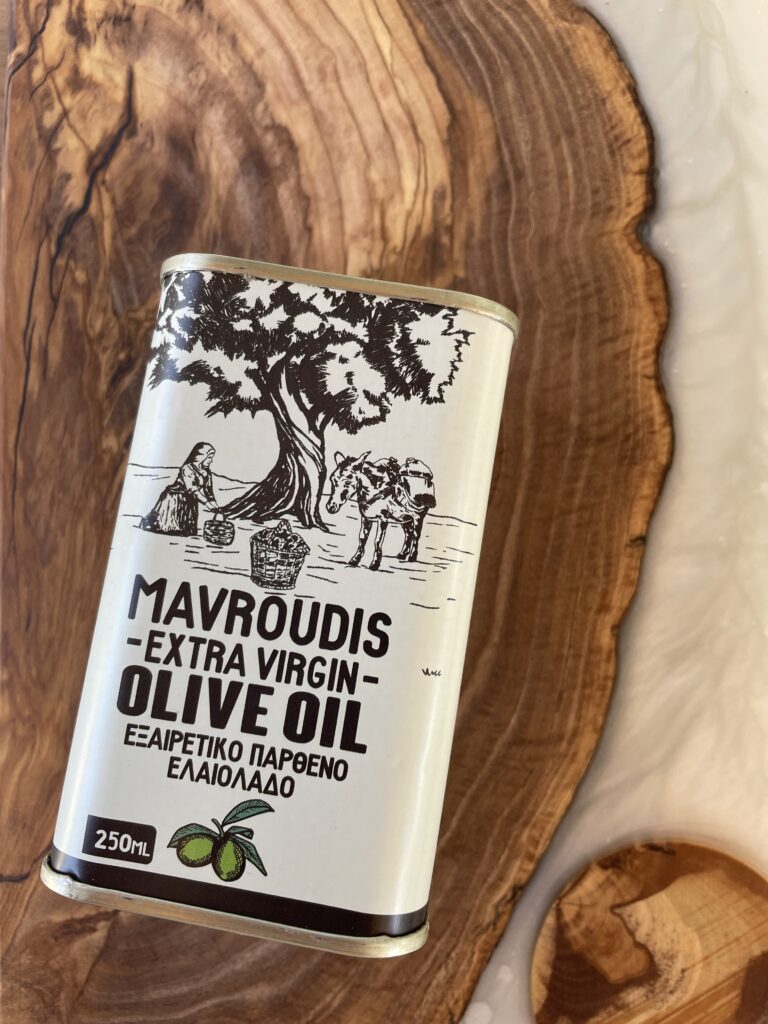
This approach keeps the majority of the stock in a relatively stable environment and reduces the frequency of oxygen exposure for each unit volume of oil.
5. Practical Guidelines for Everyday Storage
Summarizing the scientific principles above, a set of concrete, easy‑to‑apply rules can guide consumers:
-Store olive oil in a cool, dark place, ideally 16–20 °C, away from stoves, ovens, radiators, and windows.
-Prefer dark glass bottles or metal tins over clear glass and low‑grade plastic.
-Keep containers tightly closed when not in use and avoid leaving the cap off during cooking.
-Buy quantities that you can realistically consume within 6–12 months after opening.
-If you purchase in large formats, decant into smaller dark bottles and keep the main container sealed as much as possible.
-Do not worry if the oil becomes cloudy or partially solid in the cold; allow it to return slowly to room temperature before use.
6. From Science to Sensory Experience
Proper storage is ultimately about protecting the sensory and nutritional identity of a high‑quality extra virgin olive oil. By controlling light, heat, and oxygen, the consumer safeguards the very compounds—volatile aromatics, phenolics, and pigments—that define complexity, freshness, and health benefits.
For premium producers, these practices complement careful cultivation, timely harvesting, and cold extraction. For informed consumers, they represent the final, essential step in honouring the product from the grove all the way to the plate.
For those who wish to translate these best practices into their daily cooking, exploring a carefully crafted extra virgin olive oil is the most tangible next step. By choosing premium oils that are cold‑extracted, low in acidity and properly bottled in protective packaging, you secure both the flavour and the health benefits that accurate storage is designed to preserve. You can discover a curated selection of such extra virgin olive oils and gourmet infused options directly through our online store, where each product clearly indicates harvest date, origin and recommended storage guidelines to support an informed, quality‑driven choice.
No Comments